China’s leading aesthetic laser manufacturers are reshaping how clinics manage growing treatment demand. The ISAPS Global Survey 2023 recorded more than 19 million nonsurgical aesthetic procedures worldwide. That volume increases pressure on consultation rooms, treatment schedules, and recovery areas. Clinics now ask a practical question: how do aesthetic laser systems improve clinic efficiency?
Well-designed platforms can combine multiple wavelengths, handpieces, and treatment modes in one workstation. This may reduce equipment changes between vascular, pigmentation, hair-removal, and rejuvenation procedures. A nurse can prepare one console while the practitioner reviews another patient’s skin assessment. Faster setup can protect appointment capacity, but only when staff training is consistent. Speed alone is not efficiency.
Industry market analyses from Grand View Research and Fortune Business Insights describe continued growth in medical aesthetics and energy-based devices. These reports also highlight demand for safer, more personalized treatments. China’s National Medical Products Administration requires appropriate registration, labeling, and clinical-use controls for regulated medical devices. Reliable clinics should verify documentation, maintenance records, cooling performance, and supplier support before purchasing.
The best system is not automatically the most expensive one. It should fit patient volume, treatment mix, room layout, and staff capability. In practice, a compact platform may outperform a sophisticated device that remains idle. That is an uncomfortable point. Efficiency claims also need local evidence, including treatment time, repeat visits, consumable costs, and adverse-event monitoring. This introduction examines how Chinese aesthetic laser solutions can improve workflow without compromising clinical judgment, patient communication, or documented safety.
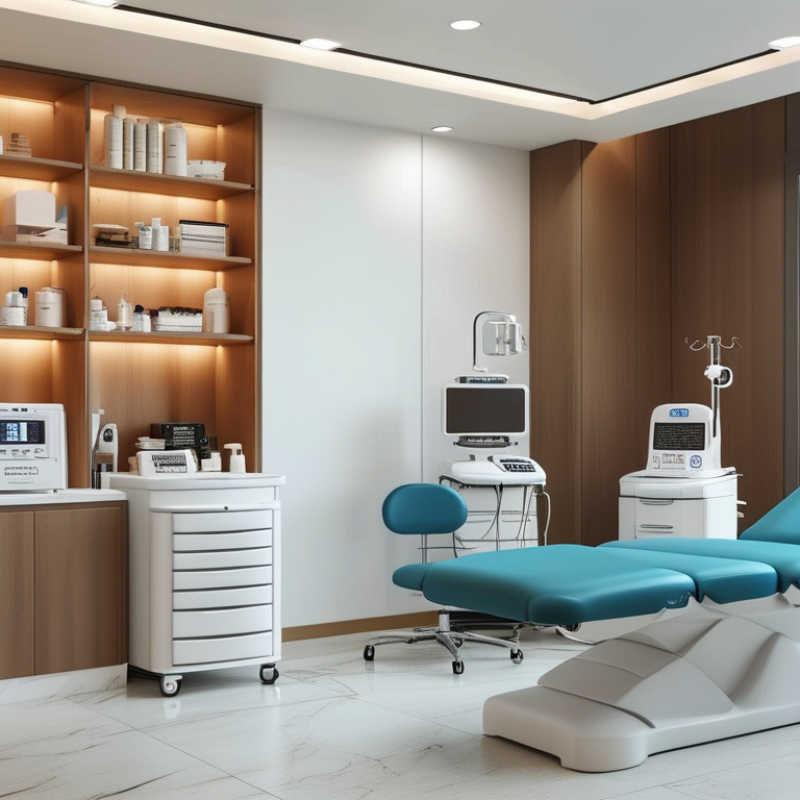
What are China’s best aesthetic lasers? The answer is not the lowest price or the brightest brochure. In clinical practice, a strong system combines stable energy delivery, suitable wavelengths, reliable cooling, and clear treatment controls. For pigmentation, vascular concerns, hair reduction, and resurfacing, the device should match the indication, skin type, and treatment depth. That sounds obvious. It is often missed.
I would assess pulse consistency during repeated shots, handpiece comfort, spot-size options, and recovery time between patients. A laser that heats unevenly can slow a room and increase patient anxiety. Efficient clinics also need intuitive interfaces, quick calibration checks, and accessible technical support. Safety features matter, including temperature monitoring, emergency stops, protective eyewear guidance, and documented maintenance records. These details support safer decisions, not just faster appointments.
China’s leading manufacturers now offer systems with practical configurations for different clinic sizes. However, “best” still depends on evidence, staff training, local regulatory clearance, and honest service terms. Ask for clinical data, test the device on suitable models, and compare results after several sessions. My own evaluation would include a busy-day trial, because a smooth demonstration may hide heat buildup or slow software. Some systems look impressive yet require more operator judgment than expected. That is where training quality becomes part of the laser itself.
How Do Aesthetic Lasers Improve Clinic Workflow?
Aesthetic lasers can improve clinic workflow when treatment design matches daily demand. The ISAPS Global Survey 2023 recorded more than 19 million nonsurgical procedures worldwide. That volume increases pressure on consultation rooms, treatment spaces, and recovery areas.
A well-designed laser system supports faster setup and repeatable treatment parameters. Clinicians can prepare settings before the patient enters. This reduces interruptions between appointments. Clear interface controls also shorten training time for new staff. In practice, that matters during busy afternoon sessions. A clinic may move patients more smoothly when cooling, handpieces, and disposable supplies stay within reach.
China-made aesthetic lasers can offer practical configurations for clinics with different budgets and room sizes. However, lower purchase cost should not decide the equipment alone. The 2024 AmSpa State of the Industry Report identifies staffing and retention as continuing operational challenges. Simple maintenance procedures can therefore protect staff time. Local service access matters too.
The weak point is often overlooked. A faster device cannot repair poor scheduling. Clinics still need documented protocols, skin assessments, informed consent, and proper safety checks. The workflow may also slow when operators overuse preset modes. Clinical judgment remains essential. As patient demand grows, managers should track room turnover, treatment duration, cancellations, and follow-up workload. Those numbers reveal whether a laser truly improves efficiency or merely adds another machine.
How China’s Best Aesthetic Lasers Improve Clinic Efficiency
Treatment efficiency depends on more than laser power. Adjustable spot sizes help clinicians treat small facial areas and larger body zones with fewer passes. Stable energy delivery supports consistent results across appointments. Integrated cooling can reduce discomfort and treatment pauses. That matters during busy clinic hours.
Simple interfaces also improve workflow. Preset protocols can reduce setup time, but clinicians must verify every setting before treatment. Clear displays, quick handpiece changes, and ergonomic designs reduce unnecessary movement. Reliable systems may also provide treatment records, service alerts, and usage data. These features support safer scheduling and better maintenance planning. Efficiency should never mean rushing.
Tips: Compare pulse duration, repetition rate, cooling response, and spot-size options before purchase. Ask for hands-on demonstrations with realistic treatment scenarios. Review training requirements, cleaning procedures, warranty coverage, and technical support. A low purchase price may become expensive when downtime interrupts appointments. Staff feedback is valuable, although it can be inconsistent without a structured trial. Check local regulations and use qualified medical professionals for every procedure. A useful system is not always the most powerful one. It is the one your team can operate accurately, repeatedly, and safely.
A practical comparison of laser features that can reduce workflow time, improve consistency, and support higher daily treatment capacity.
| Laser Feature | How It Improves Efficiency | Workflow Metric Affected | Operational Benefit | Selection Checkpoint |
|---|---|---|---|---|
| Multiple wavelengths | One platform can address different indications, such as hair reduction, vascular concerns, pigmentation, or skin resurfacing, depending on the available wavelength and approved protocol. | Room changeovers and equipment utilization | Fewer device transfers and less need to reserve separate treatment rooms for different procedures. | Confirm that each wavelength has appropriate indications, controls, accessories, and regulatory clearance for the intended market. |
| Large and interchangeable spot sizes | A larger spot covers more skin per pulse, while smaller spot sizes improve access to curved, narrow, or highly detailed areas. | Number of passes and treatment-area coverage | Faster coverage of large areas without sacrificing control in small or anatomically difficult treatment zones. | Review usable spot-size options, optical uniformity, and whether changing handpieces requires a long interruption. |
| Adjustable repetition rate | Higher pulse repetition rates can shorten pulse delivery time when the selected fluence, pulse width, cooling, and skin response remain clinically appropriate. | Energy-delivery time per treatment | Supports efficient treatment of large areas while allowing lower rates for precision work and sensitive zones. | Check whether the maximum repetition rate is available across the required energy and pulse-width settings, not only under limited conditions. |
| Integrated skin cooling | Contact, air, or cryogenic cooling can help protect the epidermis and improve patient comfort during appropriate treatments. | Pauses, comfort-related interruptions, and patient turnover | Fewer treatment pauses may improve appointment flow and patient tolerance, provided cooling is correctly matched to the procedure. | Evaluate cooling response time, cooling consistency, consumables, cleaning requirements, and compatibility with each handpiece. |
| Preset protocols with editable parameters | Stored protocols reduce repeated manual input while allowing trained clinicians to adjust settings for skin type, treatment area, and clinical response. | Setup time and parameter-entry errors | More consistent setup between operators and less time spent searching for commonly used settings. | Look for user permissions, protocol locking, treatment history, parameter visibility, and clear warnings against unsafe selections. |
| Large, intuitive touchscreen interface | Clear displays and logical navigation reduce the time required to select a mode, confirm settings, and monitor treatment status. | Operator interaction time and training time | Improves handover between trained staff and reduces avoidable interruptions during busy clinic schedules. | Assess screen readability, language options, alarm clarity, foot-pedal integration, and ease of use with gloves. |
| Fast startup and stable output | Short startup time and stable energy output help minimize waiting periods and reduce repeated calibration or troubleshooting during operating hours. | Daily availability and unplanned downtime | More predictable scheduling and better use of booked treatment slots. | Request documented warm-up requirements, output-stability data, calibration procedures, and service-response commitments. |
| Ergonomic handpieces and balanced design | Lightweight, balanced handpieces and suitable cable placement can reduce operator fatigue during repetitive procedures. | Operator endurance and treatment consistency | Supports smoother scanning patterns and helps maintain consistent technique across a full treatment day. | Test the handpiece in a simulated workflow and check trigger design, cable flexibility, grip comfort, and reach. |
| Built-in treatment records and usage logs | Recorded parameters and usage information can simplify follow-up documentation, quality review, and maintenance planning. | Documentation time and maintenance planning | Reduces manual recordkeeping and helps the clinic identify service needs before they cause extended downtime. | Check data export, patient privacy controls, access permissions, backup options, and compatibility with clinic software. |
| Easy-clean surfaces and replaceable accessories | Smooth surfaces and detachable, cleanable treatment components can simplify disinfection and room turnover. | Cleaning time and consumable management | Supports standardized infection-control routines and reduces delays between appointments. | Confirm approved cleaning methods, replacement intervals, accessory availability, and the total cost of routine consumables. |
Choosing the right laser system begins with clinical purpose, not a supplier’s sales claims. ISAPS reported 19.1 million nonsurgical aesthetic procedures worldwide in its 2023 Global Survey. This growth increases pressure on clinics to treat safely, consistently, and quickly. Clinics should match wavelength, pulse duration, spot size, and cooling technology with their most common indications, such as pigmentation, vascular concerns, hair reduction, or resurfacing.
Workflow matters just as much. A system with fast preset changes can reduce room turnover time. Clear controls also lower training demands for new operators. During evaluation, ask for treatment protocols, maintenance records, calibration procedures, and documented safety training. Grand View Research estimates continued double-digit growth in the global aesthetic laser market through 2030, but market growth does not guarantee clinical value. Technical support and spare-part availability may matter more than a polished demonstration.
Request practical evidence. Compare treatment time, consumable costs, energy stability, and patient downtime across several test cases. A lower purchase price can become expensive when service delays interrupt appointments. Clinics should also verify local regulatory clearance and electrical compatibility before installation. Some teams focus too heavily on output power. That is a mistake. Comfort, repeatability, and operator confidence often influence efficiency more than maximum energy. The best China-made aesthetic laser system may not be the most powerful one; it should fit the clinic’s patient profile, staff skills, budget, and measurable workflow goals.
Long-term efficiency depends on disciplined maintenance, not only powerful output. A clean handpiece delivers more consistent energy. A neglected cooling channel can create uneven treatment and uncomfortable temperature changes.
Use a written maintenance log after every treatment day. Record pulse counts, error codes, coolant levels, filter condition, and unusual sounds. Wipe external surfaces with the approved disinfectant, but never flood optical windows or ventilation openings. The World Health Organization reports that approximately one in ten patients experiences harm during healthcare delivery, with over half considered preventable (WHO Global Patient Safety Action Plan 2021–2030). That figure is not laser-specific, but it highlights the cost of casual routines.
Schedule qualified inspections according to the manufacturer’s service instructions and local medical-device requirements. Check calibration, aiming beams, interlocks, emergency stops, and cooling performance. IEC 60601-1 supports regular verification of electrical safety, while ISO 14971 emphasizes risk-based controls throughout a device’s life cycle. Keep service records available for clinical audits. A missed inspection can become an expensive surprise.
Do not rely on alarms alone. Staff should recognize weaker pulses, delayed cooling, or changing treatment sounds. Those details often appear before a complete failure. The imperfect part is human consistency. Busy clinics may postpone documentation, especially after a fully booked afternoon. A short checklist, witnessed by another trained operator, makes that weakness visible and easier to correct.
A structured maintenance schedule helps reduce avoidable downtime, protect treatment consistency, and improve room turnover. The chart shows practical planning intervals commonly used in aesthetic laser clinic SOPs: cleaning after each patient, daily inspection, weekly airflow and filter checks, monthly cooling-system checks, and quarterly technical review. Exact procedures and intervals should always follow the device manufacturer’s service manual and local safety requirements.
: Start with common treatments, not sales claims. Match wavelength, pulse duration, spot size, and cooling to patient needs. Consider pigmentation, vascular concerns, hair reduction, or resurfacing. The most powerful system may not be the most useful.
Fast preset changes can shorten room turnover. Clear controls reduce training time for new operators. Compare treatment duration across realistic test cases. Small delays can quietly reduce daily capacity.
Request treatment protocols, maintenance records, and calibration procedures. Ask for documented safety training and technical support details. Check spare-part availability and expected service response times. A polished demonstration proves very little.
Compare purchase price, consumables, service costs, and treatment downtime. A cheaper system may become expensive during service delays. Record energy stability and patient recovery time. The calculation is imperfect, but it is still useful.
Verify local medical-device clearance before accepting delivery. Confirm electrical compatibility with the clinic’s power supply. Check emergency stops, interlocks, and required safety procedures. Installation problems can appear late.
Use a written log after every treatment day. Record pulse counts, error codes, coolant levels, and filter condition. Wipe external surfaces with approved disinfectant. Keep liquid away from optical windows and ventilation openings.
Watch for weaker pulses, delayed cooling, or unusual treatment sounds. Changing sounds may appear before complete equipment failure. Do not rely only on alarms. Human observation still matters.
Follow service instructions and local medical-device requirements. Qualified technicians should check calibration, aiming beams, and cooling performance. They should also verify electrical safety and emergency controls. Keep service records ready for audits.
Use a short checklist after busy treatment sessions. A second trained operator can witness important checks. Staff may postpone documentation after a fully booked afternoon. That weakness deserves attention, not blame.
China’s best aesthetic lasers are not defined by one device or application, but by systems that combine reliable energy delivery, versatile treatment settings, user-friendly controls, and consistent performance. How do aesthetic laser systems improve clinic efficiency? They help clinics streamline patient assessment, treatment preparation, operation, and follow-up by supporting multiple procedures with adjustable parameters in one platform. Faster setup, intuitive interfaces, stable output, and efficient cooling can reduce treatment time while improving staff coordination and patient comfort.
Clinics should select a laser system according to their treatment scope, patient volume, available space, staff expertise, safety features, and total operating cost. Flexible handpieces, preset protocols, real-time monitoring, and easy parameter adjustment can further improve workflow and reduce avoidable downtime. Long-term efficiency also depends on regular cleaning, scheduled calibration, careful inspection of cooling and optical components, software updates, operator training, and timely technical service. With appropriate selection and disciplined maintenance, aesthetic laser technology can support safer, smoother, and more productive clinic operations.
