Many people ask, “is laser treatment safe for all skin types?” The honest answer is more nuanced. Laser safety depends on the device, wavelength, treatment goal, skin condition, and operator’s training. Hair removal, vascular treatment, pigmentation correction, and resurfacing use different technologies. One setting cannot suit every complexion.
The Fitzpatrick scale remains a practical clinical tool. It estimates how skin responds to ultraviolet exposure, from very fair Type I to deeply pigmented Type VI. However, it is not a complete safety assessment. The American Academy of Dermatology warns that darker skin can face greater risks of burns, prolonged redness, and post-inflammatory hyperpigmentation after certain procedures. A 2022 review in Dermatologic Surgery also emphasized careful parameter selection for skin of color. These findings support conservative treatment planning rather than broad promises.
Small details matter. A qualified dermatologist should review medications, recent sun exposure, keloid history, active irritation, and previous reactions. They may perform a patch test on the jawline or forearm. The area should be monitored for several days before full treatment. FDA-cleared equipment can reduce uncertainty, but clearance does not guarantee identical results for every patient. Even careful protocols are not flawless.
Ask which wavelength is being used and why. Request before-and-after examples from similar skin tones. Professional guidance from the ASLMS and AAD supports informed consent, eye protection, cooling, and trained supervision. Safe treatment is individualized, documented, and adjustable. That is the standard—not a universal guarantee.
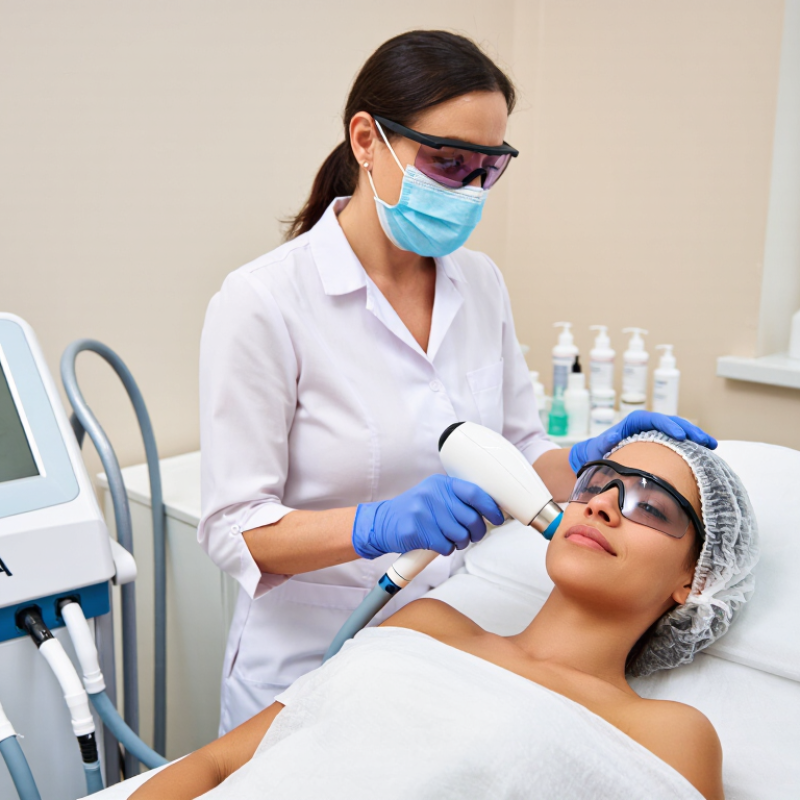
Laser safety begins with Fitzpatrick classification, not skin color alone. Types I and II usually burn easily and tan minimally. Type III may tan gradually, while Type IV tans readily. Types V and VI contain more melanin and rarely burn, yet they face higher risks of burns, dark patches, light patches, and uneven texture. That contrast matters.
Melanin absorbs laser energy, competing with the intended treatment target. A qualified clinician should assess your recent sun exposure, tanning history, medications, scars, and natural undertone. The Fitzpatrick scale is useful but imperfect. Two people with the same type may react differently. A careful consultation and a small test area can reveal unexpected sensitivity. Treatment settings should change with skin type, body area, hair thickness, and treatment goal. Lower energy may be safer, but it can also require more sessions. Honest expectations matter.
Tips: Avoid recent tanning before treatment. Ask how your skin type was classified. Request a test patch when appropriate. Follow cooling and aftercare instructions closely. Report unusual heat, blistering, or prolonged darkening promptly. Even experienced practitioners cannot guarantee identical results for every skin type. Safety requires monitoring, not assumptions.
Laser safety depends on skin tone, treatment goals, settings, and clinical judgment. No wavelength is automatically safe for everyone. Darker skin contains more melanin, which can absorb laser energy and increase the risk of burns or uneven pigmentation.
A 1064-nm Nd:YAG laser reaches deeper layers with less surface melanin absorption than shorter wavelengths. This feature may reduce unwanted heating in richly pigmented skin. It is often considered for hair reduction, vascular concerns, and selected skin treatments. Still, “safer” does not mean risk-free.
A qualified practitioner should assess your natural tone, tanning history, medications, and previous reactions. Ask about their experience treating darker skin. Request a small test area before a larger session. The skin should be monitored for swelling, excessive heat, blistering, or color changes.
Cooling can improve comfort and protect the surface. Appropriate pulse duration and energy settings matter just as much as wavelength. Higher power is not automatically better. Go slowly.
Real treatment decisions are sometimes less certain than online guides suggest. Skin varies. A setting that worked well for one person may cause irritation in another. After treatment, avoid unnecessary sun exposure and follow clear aftercare instructions. Contact a medical professional if pain, blistering, or darkening persists.
Laser treatment can be safe for many skin types when settings match your pigment, hair, condition, and treatment area. A qualified clinician should examine your skin before proceeding. Darker or recently tanned skin may absorb more laser energy, increasing the risk of burns or uneven pigmentation. A patch test can reveal how your skin may respond, although it cannot predict every reaction.
Tanning beds, outdoor tanning, and self-tanning products should be discussed honestly. Recent tanning may require postponing treatment until your natural tone returns. Tell the clinician about every medication, supplement, and topical product you use. Some medicines increase light sensitivity or affect healing. Certain acne treatments, antibiotics, and herbal products may require extra caution. Do not stop prescribed medication without medical advice.
Active infections, open wounds, severe irritation, or unexplained rashes usually require treatment before laser exposure. A history of abnormal scarring, pigment changes, or cold sores also matters. Pregnancy, immune conditions, and previous laser reactions need individual assessment. The safest choice is sometimes delaying treatment. That can feel frustrating, but rushing is worse.
Tips: Avoid tanning before and after treatment. Arrive with clean, product-free skin. Ask who will perform the procedure and what training they have. Request written aftercare instructions. Report burning, blistering, or worsening discoloration promptly. Patch tests help, but they are not perfect.
| Safety Factor | What It Means | Potential Concern | Recommended Action Before Treatment |
|---|---|---|---|
| Fitzpatrick Skin Type I–II | Very fair skin that usually burns easily and tans minimally. | Redness, swelling, temporary pigment changes, burns, or scarring if excessive energy is used. | Use conservative settings, strict eye protection, cooling when appropriate, and a test spot for the selected laser. |
| Fitzpatrick Skin Type III–IV | Medium skin that may tan gradually or readily after sun exposure. | Post-inflammatory hyperpigmentation or hypopigmentation may occur, particularly after inflammation. | Assess natural and recent tanning, consider test spots, and use treatment parameters appropriate for the target and skin tone. |
| Fitzpatrick Skin Type V–VI | Brown to deeply pigmented skin that tans easily and rarely burns. | Higher risk of unwanted lightening or darkening, burns, and prolonged discoloration with some lasers. | Choose a clinician experienced with darker skin, consider longer wavelengths or alternative technologies when suitable, and perform a test spot. |
| Recent Sun Exposure or Screen Tanning | Recent ultraviolet exposure or tanning from a sunbed, tanning booth, or similar device. | Increased melanin can absorb laser energy, raising the risk of burns and uneven pigmentation. | Postpone treatment until the tan has faded; avoid intentional tanning and use broad-spectrum SPF 30 or higher as directed by a clinician. |
| Self-Tanning Products | Topical products that temporarily darken the outer layer of the skin, commonly using dihydroxyacetone. | Uneven treatment response or difficulty assessing the skin’s true baseline color. | Stop use and allow the color to fade before treatment; do not use tanning products to prepare for a session. |
| Photosensitizing Medicines | Medicines that can increase sensitivity to light, including some antibiotics, diuretics, anti-inflammatory drugs, and retinoids. | Greater risk of excessive redness, blistering, burns, or abnormal pigmentation, depending on the medicine and laser. | Provide a complete medication and supplement list. Never stop a prescribed medicine without the prescriber’s advice; the clinician may delay or modify treatment. |
| Isotretinoin History | Current or recent use of oral isotretinoin for acne. | Skin may be dry, fragile, or more reactive. Risk depends on the procedure, treatment depth, and individual healing response. | Disclose the dose and dates. The treating clinician and prescriber should decide whether to delay treatment; do not rely on a fixed waiting period for every laser procedure. |
| Active Infection or Open Wound | Bacterial, viral, or fungal infection; cold sore; inflamed acne; dermatitis; or broken skin in the treatment area. | Possible worsening of infection, delayed healing, or spread to nearby skin. | Defer treatment until the condition has healed or been medically managed. Tell the clinician about a history of recurrent cold sores. |
| History of Keloids or Poor Wound Healing | Previous raised scars, prolonged healing, or significant scarring after minor injuries. | Higher risk of hypertrophic scarring, keloids, or persistent texture changes. | Discuss alternatives and perform a careful risk assessment; a test spot may not eliminate the possibility of scarring. |
| Bleeding Risk or Anticoagulants | Use of blood thinners or a medical condition that increases bruising or bleeding. | More bruising, pinpoint bleeding, or delayed recovery, especially with procedures that injure the skin. | Disclose all medicines and medical conditions. Do not stop anticoagulants unless the prescribing clinician specifically instructs you to do so. |
| Pregnancy or Breastfeeding | A period when elective cosmetic procedures may require additional caution. | Safety data are limited for many cosmetic laser procedures, and hormones may affect pigmentation. | Generally postpone elective treatment and obtain advice from the relevant healthcare professional. |
| History of Pigment Disorders | Melasma, vitiligo, post-inflammatory hyperpigmentation, or frequent dark marks after skin injury. | Laser-induced inflammation may worsen discoloration or trigger uneven pigment changes. | Stabilize the condition when possible, set realistic expectations, and discuss non-laser alternatives. |
| Test Spot | A small treatment area used to observe the skin’s response before a larger session. | A test spot cannot predict every delayed reaction, but it can reveal early intolerance or pigment response. | Ask whether a test spot is appropriate and follow the clinician’s observation period before proceeding. |
| Qualified Clinical Assessment | A consultation that considers skin type, tanning status, medical history, medicines, treatment goal, and laser settings. | The same laser and settings are not appropriate for every person or every body area. | Choose a licensed, appropriately trained healthcare professional and request individualized benefits, risks, and aftercare instructions. |
Important: No laser procedure is automatically safe for every skin type or medical situation. Safety depends on the laser technology, treatment purpose, energy settings, skin condition, recent tanning, medications, and the clinician’s assessment.
Laser treatment is not automatically safe for every skin type. Fitzpatrick IV–VI skin contains more melanin, which can absorb laser energy and increase the risk of burns or post-inflammatory hyperpigmentation. A 2022 systematic review in Lasers in Medical Science reported that pigmentary complications appeared more frequently in darker skin types than in types I–III.
A trained medical provider should examine tanning, scars, medications, and previous reactions before treatment. Ask for a small patch test. Review it after 24–72 hours, watching for prolonged redness, swelling, blistering, or darkening. A tiny test area can reveal problems that consultation alone may miss. It is not perfect.
Cooling matters. Contact cooling, chilled air, or a cooled gel can reduce heat reaching the surrounding skin. Conservative energy settings are safer than chasing dramatic results in one session. Lower fluence, longer pulse duration, and wider treatment intervals may suit some darker skin types, depending on the laser and target. Published dermatology reviews consistently support gradual escalation and careful monitoring, especially for Fitzpatrick IV–VI skin.
The provider should record the settings and your skin response. That detail protects the next session. Stop when the skin looks unusually pale, gray, blistered, or intensely painful. Pain is not proof of effectiveness. I would rather accept slower improvement than dismiss a warning sign, although even careful protocols cannot remove every risk.
How to Know If Laser Treatment Is Safe for All Skin Types?
Laser safety is not confirmed by skin color alone. Fitzpatrick type, tanning, medication, and previous pigment reactions all matter. Darker skin may develop post-inflammatory hyperpigmentation after heat exposure. The American Academy of Dermatology Association identifies this risk in laser procedures. A test spot is essential. It should be photographed under consistent lighting. Record redness, swelling, darkening, and lightening.
The 2023 ISAPS Global Survey reported more than 19 million nonsurgical aesthetic procedures worldwide. That volume shows growing demand, not universal safety. Treatment settings still require individual adjustment. After each session, inspect the treated area before increasing energy. A normal first session can mislead. Pigment changes may appear days later. Patients should report gray patches, sharp borders, prolonged redness, or new dark spots.
Reassess safety after four to six sessions, even when results look acceptable. Compare standardized photographs, not memory. Ask about sun exposure, new products, and healing time. If pigment becomes darker, pause treatment and review the plan with a qualified medical professional. The U.S. Food and Drug Administration’s device-reporting data also has an important limitation: reported events cannot establish true complication rates. That makes careful monitoring more valuable. I would not treat a session count as a guarantee. Four sessions may be reasonable for one person, yet excessive for another.
Pigment response can vary with skin type, treatment settings, wavelength, and sun exposure. A visual pigment check should be completed after every session, while treatment safety should be formally reassessed after four to six sessions before continuing the same plan.
It classifies skin responses from Type I to Type VI. Types I and II usually burn easily. Types V and VI rarely burn but may develop pigment changes.
It may be safe when settings match your skin, hair, treatment area, and medical history. Safety is never automatic. Individual reactions vary.
Melanin absorbs laser energy and may compete with the treatment target. This can increase risks of burns, dark patches, light patches, or uneven texture.
Recent tanning can increase energy absorption and pigment risks. Discuss outdoor tanning, tanning beds, and self-tanning products honestly. Treatment may need postponement.
Report every medication, supplement, and topical product. Mention previous pigment changes, abnormal scars, cold sores, infections, rashes, or laser reactions.
A small test area can reveal unexpected sensitivity. Photograph it under consistent lighting. A patch test helps, but it cannot predict every reaction.
Report unusual heat, blistering, prolonged redness, gray patches, or sharp dark borders. New or worsening discoloration needs prompt medical review.
Reassess after each session and again after four to six sessions. Compare standardized photographs, not memory. More sessions are not always safer.
Avoid tanning before and after treatment. Arrive with clean, product-free skin. Follow cooling and aftercare instructions closely. I may overlook something without careful monitoring.
Is laser treatment safe for all skin types? The answer depends on the individual, the laser wavelength, and the treatment plan. Fitzpatrick skin types I–VI respond differently because melanin absorbs laser energy, creating varying risks of burns, irritation, darkening, or lightening. Darker skin types generally require extra caution, and 1064-nm Nd:YAG lasers are often considered a more suitable option because they can target deeper tissue with less surface melanin absorption.
Before treatment, a qualified professional should screen for recent tanning, medications, skin conditions, and other contraindications. A small 24–72-hour patch test can help assess the skin’s response. Cooling methods and conservative energy settings may further reduce complications. After each session, the skin should be monitored for pigment changes, prolonged redness, or other reactions. Safety should be reassessed throughout the process, especially after four to six sessions, so settings can be adjusted or treatment paused when necessary.
