What Skin Concerns Can Laser Treatments Address?

Time:2026-10-24 Author:Sienna
0%

What skin concerns can laser treatments address? The answer begins with diagnosis, not marketing. According to the American Society for Dermatologic Surgery’s 2023 Consumer Survey, signs of aging and sun damage remain major patient concerns. Lasers may improve fine lines, uneven pigmentation, acne scars, enlarged pores, redness, visible vessels, and unwanted hair. Different wavelengths target different depths. A fractional resurfacing laser creates microscopic treatment columns. A vascular laser focuses on red vessels. The skin may feel warm, tight, or gritty afterward.

Dermatologist Dr. Tina Alster has emphasized, “There is no one-size-fits-all laser treatment.” That principle matters. Skin tone, scar depth, medication use, and healing history can change the safest approach. The American Academy of Dermatology also stresses consultation with a board-certified dermatologist, especially for darker skin tones or active skin conditions. Treatment outcomes depend on device settings, clinical experience, and aftercare. Not just the machine.

Lasers are not magic erasers. They may soften texture rather than remove every mark. Some pigmentation can return after ultraviolet exposure. Acne scars may need several sessions or combination therapy. A 2024 global aesthetic medicine report from ISAPS also reflects continued demand for minimally invasive procedures, yet popularity should not replace clinical judgment. Before choosing treatment, ask what concern is being treated, what results are realistic, and what risks apply to your skin. Good care leaves room for uncertainty. That is often where trust begins.
What Skin Concerns Can Laser Treatments Address?

Laser Fundamentals: Wavelength, Chromophore, Depth, and FDA Clearance

What Skin Concerns Can Laser Treatments Address?

Laser treatments may improve unwanted hair, brown spots, visible vessels, acne scars, wrinkles, and uneven texture. Results depend on the device, treatment settings, and your skin’s condition. In clinical practice, a small test area can reveal how skin may respond before treating a larger zone. The skin does not always follow the textbook.

Laser fundamentals explain much of this process.

Wavelength determines which tissue target, or chromophore, absorbs the light. Melanin absorbs energy used for some pigment and hair treatments. Hemoglobin absorbs wavelengths aimed at certain red vessels. Water absorbs energy used for resurfacing and collagen remodeling. Depth matters too. Superficial energy may affect surface pigment, while deeper energy can reach follicles or dermal tissue. Poorly matched settings may cause burns, prolonged redness, or unwanted pigment changes.

FDA clearance should be read carefully.

It generally means a specific device and use received clearance for defined indications, not that every laser treatment is risk-free. A qualified medical professional should review your goals, medications, tanning history, skin tone, and tendency toward scarring. Ask which wavelength and chromophore are involved, how deeply the energy acts, and what evidence supports the proposed use. Be cautious with confident promises. Some concerns improve gradually, while others need several sessions or another treatment approach. оттур

Pigmentation: Q-Switched Lasers and 50–90% Clearance Reported in Studies

What Skin Concerns Can Laser Treatments Address?

Pigmentation is one of the most discussed concerns in laser dermatology. Q-switched lasers deliver very short pulses that can fragment excess melanin. The body then gradually clears these particles. Studies have reported 50–90% clearance for selected pigmentation cases. However, this range is not a promise. Real skin rarely behaves so neatly.

Treatment response depends on the pigment type, skin tone, depth, and underlying cause. Freckles may respond differently from melasma or post-inflammatory hyperpigmentation. In clinical practice, careful diagnosis matters before choosing settings. Darker skin may face a higher risk of temporary darkening or light spots. Results also depend on sun exposure and aftercare. Pigment can return.

Tips: Ask how the clinician identified your pigmentation. Request realistic before-and-after examples for a similar skin tone. Discuss test spots, possible side effects, and sun protection. Use gentle skincare after treatment, unless your clinician advises otherwise. Patch testing matters. Avoid scheduling treatment before intense sun exposure or important events. A qualified medical professional should review your history, medications, and previous reactions. One detail is easy to overlook: repeated treatments may be needed, and more energy is not always better.

What Skin Concerns Can Laser Treatments Address? — Pigmentation: Q-Switched Lasers and 50–90% Clearance Reported in Studies
Evidence-informed overview of pigmentation concerns commonly treated with Q-switched lasers. Reported outcomes vary according to diagnosis, skin type, treatment settings, and follow-up duration.
Skin Concern Typical Pigment Location Q-Switched Laser Options Common Wavelength Typical Treatment Course Reported Clinical Outcome Important Safety Considerations Evidence Context
Solar lentigines
Sun spots and age spots
Predominantly epidermal melanin Q-switched ruby, alexandrite, or frequency-doubled Nd:YAG 694 nm, 755 nm, or 532 nm Often 1–3 sessions, generally spaced several weeks apart Studies commonly report approximately 50–90% visible lightening or clearance, depending on the laser and lesion characteristics. Transient redness, crusting, post-inflammatory hyperpigmentation, and recurrence with continued ultraviolet exposure are possible. Response is generally better for well-defined superficial lesions than for diffuse or mixed-depth pigmentation.
Freckles
Ephelides
Superficial epidermal melanin Q-switched ruby, alexandrite, or 532 nm Nd:YAG 532 nm, 694 nm, or 755 nm Usually 1–3 sessions; maintenance or sun protection may be needed Marked short-term lightening is frequently reported; clearance may fall within the broad 50–90% range in selected studies, but recurrence is common. Freckles can darken again after ultraviolet exposure. Darker skin types may have a higher risk of post-inflammatory pigment alteration. Results depend strongly on phototype, seasonal sun exposure, and whether new lesions develop after treatment.
Nevus of Ota Dermal melanocytes, often around the eye and in the trigeminal distribution Q-switched Nd:YAG is commonly selected for deeper pigment; ruby and alexandrite lasers may also be used 1064 nm, 694 nm, or 755 nm Multiple sessions are usually required, commonly 4–10 or more, with several weeks between treatments Published series have reported approximately 50–90% or greater lightening in many patients, although complete clearance is not guaranteed. Temporary swelling, purpura, textural change, recurrence, and hypo- or hyperpigmentation may occur. Ocular protection is essential. Deeper dermal pigment often requires more sessions than superficial pigmented lesions. Long-term follow-up is important.
Acquired bilateral nevus of Ota-like macules
Hori-type macules
Dermal melanin, usually on both sides of the face Q-switched Nd:YAG or Q-switched alexandrite 1064 nm or 755 nm Commonly 3–8 sessions, individualized to response Studies and case series report substantial improvement, frequently around 50–90% lightening after a course of treatment. Post-inflammatory hyperpigmentation, hypopigmentation, and recurrence are possible, particularly in higher phototypes. Diagnosis should be confirmed clinically because treatment response differs from that of epidermal lentigines and melasma.
Post-inflammatory hyperpigmentation Epidermal, dermal, or mixed pigment after inflammation or injury Low-fluence 1064 nm Nd:YAG may be considered in selected cases; treatment is diagnosis- and skin-type dependent 1064 nm Often several sessions, with conservative settings and careful monitoring Improvement is variable and less predictable than for discrete lentigines; a fixed 50–90% clearance rate should not be assumed. Laser treatment can worsen pigmentation if the underlying inflammation is active or if treatment parameters are too aggressive. Topical therapy, ultraviolet protection, and management of the original inflammatory trigger are often important parts of care.
Melasma Frequently mixed epidermal and dermal pigmentation Low-fluence Q-switched 1064 nm Nd:YAG has been studied, but it is not universally recommended as first-line therapy 1064 nm Usually multiple low-fluence sessions; protocols vary considerably Some studies report meaningful short-term improvement, but durable clearance is inconsistent and recurrence is common. The 50–90% range is not reliably applicable to all melasma patients. Repeated treatment may cause mottled hypopigmentation, rebound pigmentation, or worsening melasma, especially with inappropriate settings. Broad-spectrum photoprotection and evidence-based topical treatment remain central. Careful patient selection is essential.
Café-au-lait macules Primarily epidermal melanin with increased melanocyte activity Q-switched ruby, alexandrite, or Nd:YAG may be used in selected cases 532 nm, 694 nm, or 755 nm Often 1–5 sessions; recurrence may occur Partial or substantial lightening has been reported, but outcomes are variable and recurrence is relatively common. Post-treatment hyperpigmentation, hypopigmentation, textural change, and recurrence are possible. Multiple or atypical lesions should be clinically assessed before cosmetic laser treatment.
Interpretation note: “Clearance” in pigmentation studies may refer to investigator-rated or photographic improvement rather than permanent removal. Reported percentages are not directly comparable across studies because protocols, skin phototypes, lesion types, follow-up periods, and outcome scales differ. A qualified clinician should confirm the diagnosis and select wavelength, fluence, and session frequency according to the patient’s skin type and risk of pigmentary complications.

Redness and Vessels: Pulsed-Dye Lasers Show 50–90% Improvement

Laser Treatments for Redness and Visible Vessels

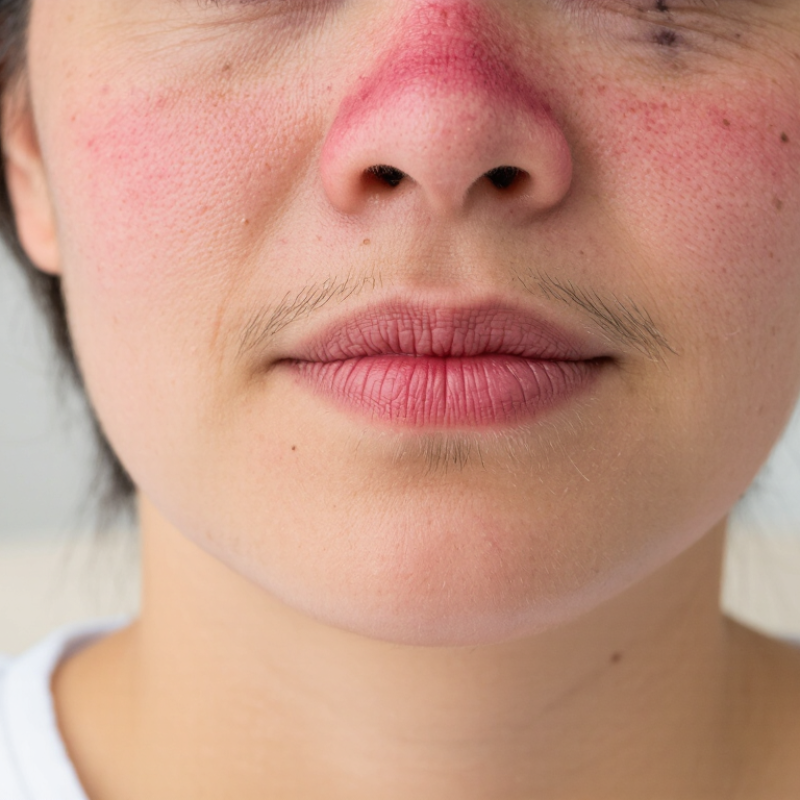
Redness and visible vessels are common concerns addressed by vascular laser treatments. Pulsed-dye lasers target oxyhemoglobin, the pigment carried inside blood vessels. Controlled light energy heats these vessels without removing the entire skin surface. Published clinical reports describe roughly 50–90% improvement in selected patients. Results vary widely.

Some people notice reduced cheek flushing after one session. Others need several treatments for thread-like vessels around the nose. The treated skin may look temporarily darker, swollen, or bruised. Mild warmth is common. Usually, these effects fade within several days. A cool compress can feel helpful.

Not every red area is vascular. Irritation, acne, eczema, and persistent inflammation may need different care. A qualified medical professional should examine the skin before treatment. Medical history, medications, skin tone, and recent tanning all matter. A small test area may improve safety. Sun protection remains essential afterward.

The numbers need careful interpretation. A 90% improvement may describe one vessel pattern, not every form of redness. Some vessels can return, especially when rosacea triggers continue. My own expectation would stay realistic: clearer skin, not flawless skin. Even experienced practitioners can misjudge how deeply a vessel sits. Patient photographs, consistent lighting, and follow-up visits help assess genuine change.

Acne Scars: Fractional Resurfacing Produces About 30–70% Improvement

What Skin Concerns Can Laser Treatments Address?

Acne scars are among the most common concerns treated with fractional resurfacing. The procedure creates microscopic columns of controlled heat in the skin. Surrounding tissue remains intact, helping the area heal more efficiently. This process can stimulate collagen and gradually soften uneven texture. Clinical reports often describe about 30–70% improvement, depending on scar depth, skin type, and treatment settings. That range is not a promise. It reflects different patients and different definitions of improvement.

Rolling scars may respond more noticeably than deep ice-pick scars. Some boxcar scars also improve, but they may require several sessions. A qualified dermatology professional should examine the scars before treatment. Active acne, inflammation, or a tendency toward abnormal pigmentation can affect the plan. Skin may appear red and swollen afterward. A rough, sandpaper-like texture can last for several days. Careful cleansing and daily sun protection support recovery.

The honest part is that laser treatment does not erase every scar. A technically successful procedure may still produce a subtle change. Lighting can make results look better or worse in photographs. This is easy to overlook. Some patients need months between sessions to judge collagen remodeling fairly. Darker skin tones may require conservative settings because temporary pigment changes are possible. Individual healing also varies, sometimes unpredictably.

Wrinkles, Hair, and Tattoos: Evidence, Limits, and Safety Data

Laser treatments can target wrinkles, unwanted hair, and tattoos, but each concern requires a different mechanism. For wrinkles, resurfacing lasers remove or heat selected skin layers, encouraging collagen remodeling. Peer-reviewed studies report improvement in fine lines and texture after carefully planned sessions. Results vary with age, skin tone, sun exposure, and healing capacity. They are not permanent. A forehead line can return as facial movement continues.

For hair reduction, laser energy is absorbed by pigment in the follicle. Darker, thicker hairs usually respond better than blond, gray, or red hairs. Several sessions are common because follicles grow in cycles. Reduction does not always mean complete removal. Not always. Hormonal conditions may drive regrowth. Experienced clinicians adjust energy, cooling, and treatment intervals, especially for darker skin. Burns and temporary color changes deserve serious attention.

Tattoo removal uses pulses to fragment ink, which immune cells gradually clear. Evidence supports meaningful fading, yet colors respond unevenly, and some marks remain. Black ink often responds more predictably than green, blue, or pale pigments. Side effects include redness, swelling, blistering, scarring, and light or dark patches. A patch test and documented medical history can reduce avoidable risk. The evidence is reassuring, but not tidy. Safety depends on settings, skin, aftercare, and honest expectations. A small test area may reveal more than a confident promise.

What Skin Concerns Can Laser Treatments Address?

Wrinkles, hair, and tattoos: representative laser wavelengths, evidence limits, and safety considerations.

Hair: Alexandrite and Nd:YAG lasers target melanin in the hair follicle. Multiple sessions are usually required, and results vary with hair color, skin tone, hormonal factors, and treatment settings.

Wrinkles: Er:YAG and CO₂ lasers remove or heat water-containing skin tissue to improve texture and fine lines. They cannot stop aging, and recovery time and risks increase with more aggressive treatment.

Tattoos: Q-switched or picosecond systems, commonly using Nd:YAG wavelengths, fragment tattoo pigments. Several sessions are often needed; complete clearance is not guaranteed, and some colors respond poorly.

Safety: Appropriate eye protection, experienced clinical supervision, and careful assessment of skin type and tanning history are essential. Possible adverse effects include burns, temporary redness, pigment changes, infection, scarring, and incomplete treatment response.

The chart shows representative wavelengths used in dermatology, not a ranking of treatment effectiveness or safety. Actual devices and treatment parameters differ by patient and indication.

FAQS

What pigmentation concerns can short-pulse laser treatments address?

They can fragment excess melanin in selected pigmentation cases. The body gradually clears the particles. Results vary widely.

How much pigmentation clearance can be expected?

Studies report roughly 50–90% clearance in selected cases. This range is not a promise. Real skin behaves less neatly.

Why can pigmentation return after treatment?

Sun exposure, underlying causes, and pigment depth can affect recurrence. Melasma and post-inflammatory pigmentation may need different strategies.

Are laser treatments safe for darker skin tones?

They can carry higher risks of temporary darkening or light spots. Discuss settings, cooling, test spots, and aftercare carefully.

Can lasers improve wrinkles?

Resurfacing treatments may improve fine lines and skin texture. Results depend on healing, age, and sun exposure. They are not permanent.

Does laser hair treatment remove every hair?

Usually, it reduces hair rather than guaranteeing complete removal. Several sessions are common because follicles grow in cycles.

Which hair types respond best?

Darker, thicker hairs usually respond better. Blond, gray, and red hairs may respond less consistently. Hormonal changes can cause regrowth.

What should people know about tattoo fading?

Pulses fragment ink, and immune cells gradually clear it. Dark ink often fades more predictably than green, blue, or pale pigments. Results are uneven.

What precautions should be taken before laser treatment?

Ask how the concern was diagnosed and request similar before-and-after examples. Discuss patch testing, medications, previous reactions, and sun exposure.

What are common laser side effects?

Redness, swelling, blistering, burns, scarring, and color changes may occur. More energy is not always better. Patch testing matters.

Conclusion

Understanding what skin concerns can laser treatments address begins with recognizing how laser wavelength, target chromophore, treatment depth, and regulatory clearance affect results. Different systems are designed to interact with pigment, blood vessels, water, or tattoo ink, making them potentially useful for uneven pigmentation, facial redness, visible vessels, acne scars, wrinkles, unwanted hair, and tattoos. Q-switched treatments have reported approximately 50–90% pigment clearance in some studies, while pulsed-dye approaches may produce around 50–90% improvement in redness and vascular concerns.

For acne scars, fractional resurfacing commonly shows about 30–70% improvement, although outcomes vary according to scar type, skin characteristics, and treatment plan. Laser procedures may also soften fine lines, reduce hair growth, or fade tattoos, but they do not guarantee complete correction. Results, side effects, recovery time, and suitability depend on the device, settings, and individual health history. A qualified professional should assess the skin, explain evidence and limitations, and confirm that the selected treatment is appropriately cleared for its intended use.

Sienna

Sienna

Sienna is a skilled marketing professional with a deep expertise in our company’s core products and services. With a passion for innovation and detail, she plays a pivotal role in crafting insightful blog posts that not only highlight the unique features of our offerings but also provide valuable......